Monday, March 27, 2006

Flying 'United'


Saw the United 93 trailer over the weekend. Not entirely sure how I feel about it. I know how others do, as both my wife and my mother expressed the very opposite of interest: They were repulsed at the very idea of a 9/11 movie. (I didn’t have the heart to tell them that there were two coming within 6 months of each other.)

I was sort of excited by it. By the looks of it, United 93 seems to be a tale of heroes. And I’m a sucker for heroic stories. And I don’t mean superheroes, since few of them actually feature the defining characteristic of the hero’s story: choice.

One becomes a hero in the moment when they make the choice between safety and danger, when they choose to risk themselves for something else. So many so-called superheroes don’t make that choice. If Superman made that choice, it was a long time ago (and still sort of questionable since he is, for all intents and purposes, an invulnerable orphan with a secret identity, and therefore can’t actually risk anything). Batman is a psychopath, and one can’t trust the motives of the clinically insane. Wonder Woman, again, invulnerable, though her willingness to ostracize herself from her people and her home to do good works in man’s world probably tips the scales.

What interests me is the idea of trying to divine what made those people on board United Flight 93 decide not to go gently into that good night, and not give up without a fight. Is it the fact that they were able to face their mortality, in a very real way, and knowing they were already dead, had nothing to lose? Perhaps, though there were still people who stayed in their seats, rather than storm the cockpit and by so doing save thousands of lives. And that’s heroism: choosing to do that which you ordinarily wouldn’t for the sake of someone else.

(I know this'll get me in trouble in lots of quarters, but I don't think the firefighters and police officers who rushed into the smoking Towers should be considered "heroes." They were doing their jobs. Same with Secret Service officers who jump in front of bullets. It's right there in the job description and they are expected to do as such. No, their heroic moments came when they took the entrance exams.)

It is probably too soon for a 9/11 movie, but, still, I really do hope United 93 is good. Because, if nothing else, those people deserve a good movie.

Tuesday, March 21, 2006

Crash Landing


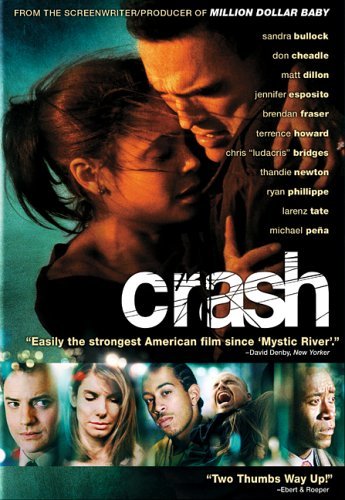
I know, it’s probably some sort of job-related crime, working where I work, that I hadn’t seen the Best Picture winner until a week or so after the Oscars. But, I finally caught up with it, and I’ve got a theory:

Race is the new Holocaust.

To clarify: For years, if there was a film about the Holocaust in any given category, it was going to win the Oscar. Period. That’s just the way it went. And that’s fine. Many of them were good, they were all worth making—it was a corner of history that lay unilluminated for far too long. But some of them also got by on the sheer emotional impact of the Holocaust without doing the filmmaking heavy-lifting required to actually be a good movie.

And now, I think race relations in this country is starting to be examined in much the same way. (And, I firmly believe, if someone ever manages to make a film, a great film, about the Middle Passage, it’ll change lives, much in the way that Roots did.)

So Crash won the Oscar. And it’s not a good film. Well-intentioned, I suppose, but still not good. It’s a movie populated by complex cariactures that do and say things that defy reality. To wit:
  • Don Cheadle’s detective has enough of a relationship with his hottie partner to not only bring her to the coroner to identify his brother’s body, but to sleep with her. Then, he calls her, essentially, a dirty Mexican (knowing, as one who must’ve spent hundreds of hours in a squad car with her, that she’s Puerto Rican). But he’s a good guy, because he buys his junkie mom groceries.
  • An employee of the Los Angeles DA’s office says to Cheadle’s detective (who, by the way, he needs something from), “That’s what’s wrong with you black people.” Who the hell says that? Out loud? Outside of a Klan rally?
  • It’s not enough for Matt Dillon’s character to be a racist sexual offender, but he’s also gotta be a saint who rescues a woman from a burning car…and helps his dad piss at night.
  • Terrence Howard’s TV director tries to make up for being emasculated at the hands of the LAPD by leading two squad cars on a high-speed pursuit and then, taking the gun from his would-be carjacker, trying to goad them into shooting him. Why? Because, apparently, he just got incredibly, mysteriously stupid.
The plot holes are just as bad. The Persian shopkeeper who, by his own admission, can’t read, tracks the hispanic locksmith back to his home…through the phone book. Sandra Bullock, a rich woman who probably had her very expensive hardwood flooring buffed to within a millimeter of weapons-grade optics, doesn’t know better than to walk through her house with socks on…just so she can take a tumble down the stairs.

And the insistence that every character, in some fashion or another, be intricately connected to every other character smacks of bad romantic comedy. Remember Serendipity, when John Cusack never hooks up with Kate Beckinsale because he keeps missing her in elevators and taxis and planes? Turning an incredibly lazy plot device on its ear doesn’t make it better, just different.

There’s some decent acting in Crash, especially from Ludacris and Larenz Tate, but it’s real problem is its abject failure to resemble reality. A film about a topic as real as race that exists in a concocted fantasy version of reality teaches no lessons, imparts no wisdom, forces no one to examine themselves and their own feelings. It does little but, conversely, allow people to feel safe in the knowledge that They Are Not As Bad As Matt Dillon.

And that doesn’t do anyone any good.

Monday, March 20, 2006

Living for the City

I am built for cities. I have lived in or around New York City for my whole life and I never really feel as comfortable as I do when I’m in Manhattan.

And it’s not because I haven’t left it: I’ve done my share of travel, both at home and abroad. I’ve driven across the United States, letting my stomach choose the route (hence, the stops in Memphis, New Orleans, and Austin). I’ve been to Boston and Seattle and San Francisco and Philadelphia and San Diego and Los Angeles (not really a city because you can’t walk in it, but every rule needs an exception). I’ve been to London and Paris and Rome and Venice (my overseas favorite because it’s so damned stupid). I’ve been to Port-au-Prince, which is worth braving the risks to see; poverty is a defining characteristic of the urban condition, and no place is poorer than Haiti.

But my first true love is Manhattan, introduced to me in all her grandeur by my grandmother, who insisted that we take a Circle Line tour around the Island when I was 7. And I love this city because it scares me.

I’m not scared of being mugged, or shot, or harassed, or molested. My fear is not a physical one. It’s not even an emotional one. I was here, on the ground, during 9/11. I caught the last train into the city, able to see the smoking first tower right before we entered the tunnel. I walked down a Broadway completely devoid of car traffic to get to Penn Station to catch a train home that night. I had my shoes hosed off by the fire department, just in case I was carrying any carcinogenic dust into my New Jersey suburb. I didn’t lose anyone that day, but I still felt the loss. But I still come into Manhattan every day, willingly and gladly.

No, what scares me—and in turn, captivates me—is that there’s just so much I don’t know about this place. Walk down almost any block and you’ll pass, literally, hundreds of doors, all leading somewhere. And there are thousands of such doors. What goes on behind them?

I once passed a door, maybe on West 54th, perfectly maintained, totally non-descript, save the words “Manhattan Nautical Club” stenciled in gold lettering on the glass. And it was nowhere near the water. Where did it lead, who was inside, and what were they doing?

This city is a hive of mystery, and that’s what I love about it. What scares me is that I’m not really the kind of bloke who cares to solve them.

Friday, March 17, 2006

I Needed a Hero, Part V: The Manager Strikes Back

Where were we? Ah, December 2004. I had a manager, one who was excited about my script, but who was forced upon me through contractual obligation. He wanted me to rewrite it a little—add a little story beat here, streamline a little there—but he was excited to spec it.

So I rewrote. I agreed with some of their notes, and disagreed with others…and since no one had paid me for it yet, it was still mine and I wasn’t gonna sabotage my own work unless someone backed up the money truck first. In January 2005, I went to LA on weekly- entertainment-magazine business (inasmuch as it’s “business” when I travel: I was covering a crappy Martial Arts Expo that neither Wesley Snipes, Chuck Norris, nor Steven Seagal—all invited guests, mind you—bothered to show for) so I met the Manager, dropped off the rewrite, soaked up some of the “totally stoked to be in the Marc Bernardin business” love, and went home.

A week later, the Manager dropped me as a client.

As it was explained to me, while my rewrite fixed what little there was to be fixed (his words, not mine), he had a very abrupt change of heart regarding Hero Unlimited’s prospects. He just didn’t think he could sell it. And because he couldn’t sell it, he wanted nothing to do with me.

Now, I knew that Hero probably wouldn’t sell. Because it’s a hard thing for a studio executive to wrap their minds’ around. Hero is funny, but it’s not a comedy; the cast eventually travels on a spaceship, but it’s not the future; it’s science fiction, but without any lasers. And it would be expensive (though not as expensive as they’d think). I was under no illusions that I’d wake up and be Shane Black, cashing seven-figure checks and becoming the darling of Hollywood. I was in it for the meetings.

When a script hits the town, and people seem to have some genuinely positive response to it, whether it sells or not, the development execs will want to meet you. Because that’s what they do: have meetings. Meetings for D-girls and boys are like billable hours for lawyers: It’s how they prove they’re doing their jobs.

All I wanted was to get in the room with people and let them see my face, get to know, in 30 minutes, that I’m not a schmuck. And the Manager didn’t even want to get me those meetings. He didn’t really want to develop me as a client, he just wanted to sell my script and get his 10%. Which I understand, but was still disappointed by.

So we parted ways. I was free of any contractual mumbo jumbo. And, in the span of a month, I went from having two literary managers trying to represent me to having none.

Luckily, Circle of Confusion meant it when they said they wanted to be in "the Marc Bernardin business." They took me back and, after another rewrite, sent the script out...and got me the meetings. (No, it didn't sell. I know this because I'm not driving a Boxster.)

I spent a week shuttling from studio lot to studio lot, meeting, greeting, and doing lots of valuable market research. It was explained to me, very early on during Meeting Week, that no one was gonna buy a pitch from me, an unproduced, untested writer, unless it was the idea equivalent of sliced bread...that also gave blow jobs. But they would listen to those ideas, and I should use that time to see which ones got the best response and use that info to help decide what to write next.

(A little aside: The best moment of Meeting Week was on the Universal lot. I was sitting in my car, a little early for my meeting with a DreamWorks exec, when I saw the Universal Tour tram come rolling by. And, as they were passing the production company bungalows, the Tour Guide said, over the loud speakers, "Thousands of screenplays come to Universal every year. Of them, only about a hundred are bought. And of those, only 10 get made into motion pictures. I wouldn't want those odds... Am I right?" Nothing like a little reality-shot-to-the-nads to warm you up before a pitch meeting.)

So, that's what we did, Adam and I. Collated our notes, settled on the idea that got the best response in the room, and went to work. For three weeks, and then put it on the back-burner so we could devote three months to writing a comic book.

And that's the end of the Hero journey. I've still got it, sitting on my hard drive, waiting for the adventurous studio exec to take a chance. But, I've gotta tell you, I wouldn't have written it had John Rogers not dangled the Global Frequency carrot. So, for that, I am eternally grateful. He'll get a shout-out when I win an Oscar. Or a Razzie.

Tuesday, March 14, 2006

The Matrix...Explained


Found this on John August's site and it is, indeed, interesting. An explanation, written by an engineer, of what the hell the machines' grand design was for humanity, free of any Wachowskian philosophical hooey. What were the Architect and the Oracle doing, and why did they need Neo and Agent Smith to do it?

Be forewarned: Reading it won't make Reloaded or Revolutions not suck.

Monday, March 13, 2006

I Needed A Hero, Part IV: A New Hope

If you know anything about either Global Frequency or me, personally, you already know that the show didn’t happen. The pilot was finished, it tested well, and had the support of both the studio and the network. That is, until the president of The WB was replaced. The new guy wanted nothing to do with anything the old guy had a hand in and so Global Frequency was doomed. (For more, check out John Rogers’ excellent blog and this post in particular.)

So I was left with a lot of time and money invested in trying to write for a show that now didn’t exist. But I had this spec script. I liked it. My friends liked it. Even John liked it. Might as well try and do something with it.

I bought a book called Writer’s Guide to Hollywood Producers, Directors, and Screenwriter’s Agents and combed through the appendix, which listed hundreds of different production companies and agencies, their contact information, as well as whether they were looking for new clients and willing to take a flier on unproduced writers. I made my list, checked it twice, and started emailing. (Like a high school student applying to colleges, I had my dream get: Circle of Confusion, the management firm that represents, among other folks, the Wachowski brothers. They were NY-based, very science-fiction friendly, and willing to work with rookies.)

I got a few pings back, thanks to a relatively funny query letter; three to be specific: one from a production company and two from literary managers. And, yes, one of them was from Circle of Confusion. They all wanted to read the script. One of the management firms had a release that needed to be signed before they’d read it. Fine. Whatever it takes to get it in front of the right eyes. (Famous last words.)

The production company passes. They liked it, but had no experience with sci-fi and didn’t want to start with Hero. But Circle called, and totally dug it. They think it’s completely sellable and want to run with it.

The Dance of Joy was danced and danced well. And long.

Then the other management firm calls. They had the script evaluated by their own readers and it got some pretty fantastic scores. They, too, want to represent it.

An embarassment of riches. A very high-class problem to have, two different managers wanting to take you to the prom. But I chose Circle, since, A) they got back to me first and B) they’re really who I wanted to be in business with.

The Other Manager respected that decision, but informed me that, buried in that release I signed was a clause that said, essentially, If They Liked the Submitted Script, They Could Exercise the Right to Exclusively Represent It, Regardless of What I Think.

They exercised that right. And, legally, there was little I could do about it. I told Circle about the development and, while a little ticked, they took being kicked to the curb with good spirits and said they hoped we could work again in the future.

So, somehow, I found myself represented by a manager who loved the script and would only take on material he knew he could sell...and pissed off at the same time.

Not so much dancing.

Next time: It all comes full Circle.

EDIT: So we're all on the same page, and for those of you coming in late, the events detailed above took place in fall of 2004. We're all good now, ja?

Galactica: Coda

I will say this, and then not another word on Battlestar Galactica until October: It takes balls the size of armadillos to end a season like that, to totally twist your TV show on its axis and send it in a completely different direction. To quote my man Bill Cunningham: “What’s a war without a prison camp?”

I don’t know where it’s going, but I know that trying to write a spec episode of Galactica would be a pointless endeavor. I mean, how do you even try and tell a story that would fit in with the rest of the series when the series keeps changing?

Man, it’s gonna be a long seven months.

Wednesday, March 08, 2006

Galactica


I have a teenage-girl crush on Battlestar Galactica. I love this show so much that I actually have trouble writing about it. The lead review I wrote for the magazine was the hardest review I've ever done. (For me, it is always harder to write about something I love than something I hate. The venom just flies easier. It's like Spock said, "It has always been easier to destroy than to create.")

So, while I would like nothing more than to explain, in detail, the many and varied ways I admire Galactica, I won't, for it would read like the rambling love letter you sent to that little red-haired girl in homeroom before she crushed your burgeoning ego by frenching that stupid jock wrestler under the bleachers.

What I will say is that the Galactica podcasts are pure gold. For every episode, executive producer Ronald D. Moore records a showrunner's commentary track and releases it as a podcast through the Sci-Fi channel website (easily shunted into iTunes). If you're both a fan and, like me, a writer, it's bursting with insight into what is, easily, the best, most complex show on TV.

And here's the thing: I have never listened to the podcast while watching the corresponding episode. While some of Moore's comments are loosely scene-specific, the experience isn't tarnished by not having the scenes in front of you. Instead, you just get to just roll around inside a showrunner's head, learning how things went right and, more importantly, where they went wrong. (One of my favorite tracks was for an episode called "Black Market," which Moore felt failed on a fundamental level and then candidly dissected, fully shouldering the blame.)

These podcasts are an invaluable learning tool for any writer who's even casually thinking about serial storytelling, be it TV or comics. The fact that they're free is just icing on the cake.

Here's an idea that I'll just give away: Why don't the studios release feature film commentary tracks as podcasts? They're already recorded and, while won't be nearly as popular as an episode of The Office, would be like crack for cinephiles. It'd be great to have them for nothing, like most podcasts, but I'd drop 99 cents to listen to James Cameron on Aliens, or Martin Scorsese on Goodfellas, or Arnold Schwarzenegger and John Milius on Conan (seriously, one of the most entertaining tracks I've ever heard) on my commute into The City.

Look at that: an untapped revenue stream derived from material already produced and just lying around that wouldn't cannibalize from DVD sales in the slightest.

My gift to you...the magnificent seven of you who read this.

Monday, March 06, 2006

Oscars

Don't really care anymore. I mean, professionally, I have to "care," since it's prime feed for the weekly entertainment magazine that cuts my checks. But I don't, personally, care...not the way I used to when I was in my early 20s, staying up late and watching all the Billy Crystal-shepherded bidness go down, giddy with the idea that at some point I could be there, accepting my own statuette. I know better now. (It may still happen, but giving a toss over what happens during the Oscars won't get me there any faster.)

Maybe I'm just jaded. Or, more likely, bored. Because it is still, regardless of what they change each year, a horribly programmed show, far too beholden to tradition to be genuinely interesting and far too reliant on the attendance of the beautiful people to be remotely real.

So, until I or someone I know gets nominated, I'm not gonna care. (Sorta came close this year; what with one of my bosses mis-IDed as Eric Roth because he was sitting next to his husband, Tony Kushner, nominated for cowriting Munich. But I've never met Tony, so doesn't count.)

Don't ask, don't care. Too busy nursing this stupid cold I got from one of my offspring in lieu of gratitude for caring for them solo (while my wife went skiing). Too busy trying not to cough an eyeball out.

Shit. Okay, nobody move.

I Needed a Hero, Part III


Where were we? Ah, yes. I was the schmuck who didn’t drop off his writing sample spec to the showrunner of Global Frequency when he had the chance. Luckily, Mr. Rogers was swell enough to make good on his invitation to the set when they shot the pilot.

So, off I flew to Vancouver, a city with all the beauty of the Pacific northwest and all the grime of an urban slum, both at the same time. I was going to stay for just one full day, since I was paying for this out of my own pocket. (Most of my trips to the West Coast end up being on the company dime…and the company dime will get you into some rather nice hotels. My dime? Something else entirely.) I would’ve opted to stay at the Canuck equivalent of a Red Roof Inn, but the GF production was headquartered at the way more upscale Sutton Place Hotel. Apparently, every production is headquartered there. Don’t know if there’s a dearth of decent hotels in Vancouver, but this is the one.

Flew in, met John and a colleague for dinner, had a quick drink in the hotel bar — where I saw the entire friggin’ cast of The L Word gathered to celebrate the arrival of the director of the next episode, Ernest Dickerson — and went to sleep early for what was surely going to be a busy tomorrow. I should’ve known better: I would be spending the day on the set and, as I’ve said here before — and others have said better elsewhere — a day on a set is a mind-numbingly boring affair.

Don’t get me wrong: I’m a huge fan of the comic, and was totally impressed by John’s script for the pilot. (Some of you may have seen the finished product, oh, somewhere on the internet.) So it was kinda cool being there, hanging out in video village (the pavilion of playback monitors), meeting the cast, watching director Nelson McCormick plan his shots like a military operation (and with good reason; apparently, he was a combat photographer), and shooting the shit with GF creator Warren Ellis, who planted a phrase in my head that I still haven’t been able to shake free (“Godzilla bukkake”).

But being on a set is a lot of waiting: waiting for the lighting crew to swivel their gear around, waiting for the camera crew to get their focal lengths right with the stand-ins, waiting for any one of a thousand things that have to happen before a single frame of film could be shot. And, not being intimately involved with what was going on, no one asked me any questions. So I sat and watched and, like everyone else, waited. Waited to talk to John about my chances of actually writing for the show. Finally, grabbed a couple of minutes before dinner and he gave me the low-down: he’d be happy to have me come in and pitch, when the time is right, when they wrap the pilot and start filling out the stories for the first season.

Sweet. A very expensive tentative “yes,” but a yes nonetheless. (The lesson I drew from this: Chase down every lead, so long as you can afford it, and even if you can’t. It cost me almost a grand to fly out there to get five minutes of John’s time…and it was worth every penny.)

Before I left the set that night — where they started shooting the very cool opening scene, on a “San Francisco Chinatown” street — I tucked a copy of Hero Unlimited into John’s briefcase. No way I was not doing that again.

On the flight home, I scribbled down eight ideas for Global Frequency episodes. That’s how jazzed I was.

Next time: The conclusion of my Global trek and why even real-world endings should leave room for a sequel.

Monday, February 27, 2006

It was a big ol' messy mess

Yeah, the New York Comic-Con was a bit of a nightmare. They underestimated both the amount of space they'd need and the audience who'd show up (because, apparently, no one knew that there are lots of people in New York friggin' City). So on Saturday, they closed off the floor, leaving fans, professionals, and even the press barred from the place that most of them paid to get into. There are plenty of comics sites that extensively covered this debacle (this is a good starting point), so I won't get into it. I'm just glad that I took the day off on Friday and did what I needed to do then.

I'm not mad about how I was treated, even though I eventually had to do the thing I didn't want to—get in on the strength of my press status rather than the professional badge that I paid for. I just feel incredibly sorry for the poor souls like my sister-in-law and her boyfriend, who endured a crappy bus ride from Boston to come to the show...only to be told that they couldn't get in.

And I will go to the next one, simply because it's in my backyard. But unless they get more space (which, allegedly, is in the works), I'm going to avoid the whole damned island when they open it up to the fans.

Friday, February 24, 2006

Off the Grid...Sorta

Heading to the inaugural New York Comic Con. Seeing some old friends, hopefully making some new ones, and trying to scare up new opportunities. (Though, I'm not trying super-super-hard: had a meeting last night—which I can't tell you about, not yet—which may result in Adam and I being very, very busy for the next few months.)

But I'll report back if I can, when I can. So be good while I'm gone, and try not to mess up the internets too much.

Thursday, February 23, 2006

Pleasantly Strange, Is All


I was flipping channels last night, down deep in the dial, and I saw that Sin City, Hellboy, and Tank Girl were all on at the same time.

Not that it means anything in the grand scheme of things, but there were three comic-book derived films on television
(and only one of them any good), none of them featuring superheroes...and I just think that's kinda cool.

Comic book characters have become mainstream enough to serve as cable TV programming wallpaper.

(And while we're devoting any space whatsoever to the fact that Tank Girl exists as a feature film, let's take a moment to imagine just how phenomenal it might've been as an animated film, directed by Jamie Hewlett with all mad energy he would eventually bring to the Gorillaz...but younger. Stupid Lori Petty.)

Tuesday, February 21, 2006

I Needed a Hero, Part II


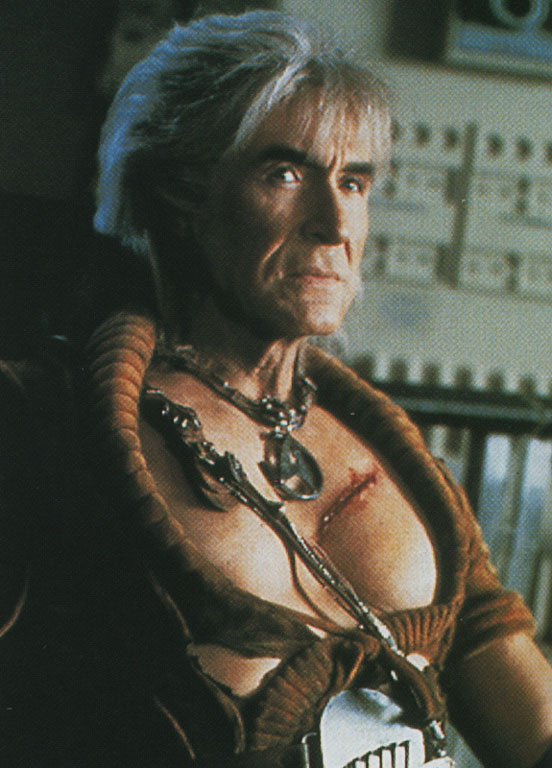
I’ve never really been an outliner. I’m pretty sure that it goes back to my inability to study. All through both high school and college, I never really learned how to study. I never had to. See, I’m smart. I say this not as a boast, or to impress, or even bludgeon lesser beings with my Khan-like superior intellect. (As with all things, I’ve met people so much smarter than I that they literally make rooms brighter with the luminescence of their big brains.) I say this to help illustrate this point. I’m smart and, unfortunately, also lazy. The former helps enable the latter, like the friend who orders dessert even though he totally knows you’re on a diet but will still eat half the damned brownie sundae just because its on the friggin' table. Taunting you.

If I was just smart, I’d be a millionaire by now. Seriously. (I know guys—okay, one guy—who was not all that sharp and just sold his internet company for millions. Plural.) But the lazy is my kryptonite, lodged about 17 inches up my arse. So, in school, I was smart enough to be able to just reread the notes I’d taken and pass almost every test. Not excel, mind you, just pass. I was a solid B– underachiever, which, naturally, annoyed my parents to no end. I didn’t study because studying was hard and, again, me lazy. (My father is an immigrant from the poorest country in the Western hemisphere who carved a very, very nice life for himself through a combination of smarts and ball-busting hard work. You can imagine how pleased he was with me...)

When I started writing, I never much dug the index-card method. My writing partner did, because he was both smart and not lazy. I’m pretty sure he’s running Houston right now. I was always more inclined to wing it, which explains why I always dried up at page 40. I had the good characters, the good beginning, and the kick-ass ending, but no way to connect the dots.

But for Hero, I wrote an outline. Sketchy, sure, missing a couple of whole scenes, definitely, but I knew where I was going and, more importantly, knew generally how to get there. And it made all the difference. Writing is a high-wire act, no doubt. There’s a ton of risk, up there. Plenty of ways to go awry, lose your balance. It also provides a terrific stage to show off with some ninja-like acrobatics. But it’s worth remembering, always remembering…

The outline is the wire.

So, I finished Hero Unlimited, the story of a private investigator and his hand-picked team of misfits and ne'er do wells, hired by humanity to find the alien bastards who stole our sun and bring it back. A big-budget, sci-fi action story that was just funny enough to confuse more than one studio exec. And writing the last 50 pages of that screenplay were more fun than anything else I’ve ever done at a computer. (Yes, including playing Doom. What four-letter word were you expecting, you preverts?) It was downhill racing through a trail that I knew well, the wind of story racing through my hair.

My last for-me revision was completed a week before my son was born. I brought it with me to that year’s San Diego Comic Con, knowing that I’d see John Rogers there, doing a little Global Frequency schtick at a Wildstorm panel. And I did; spoke to him before and after his panel and, like a dick, didn’t give him the script. (For a small but totally understandable reason: He didn’t want to carry anything. Having done that Con three times now, I know the feeling. I used to ask each and every publisher who wanted me to look at their product to drop it in the mail. Walking that floor is enough of a Bataan Death March without having to serve as your own pack animal, weighed down with pounds of comics.)

I probably should’ve pressed him, but didn’t want to come off like a pushy schmuck, forcing my one and only Hollywood contact to do something he didn’t want to do because I desperately wanted, needed him to read my script.

So I FedExed it to him once I got back home. And it got lost on his desk. Because that's what happens. But I finally managed to get it to him. Of course, I had to fly all the way to Vancouver to do it.

Next time: Why movie/TV sets are the most boring places on Earth and the Sutton Place Hotel is the nexus of the showbiz universe.

Tuesday, February 14, 2006

I Love Fear


I read a lot of comics. Thankfully, most of the publishers I used to deal with as my weekly entertainment magazine’s Head Comics Geek in Charge have kept me on their comp lists, so a lot of stuff crosses my desk. Most of it isn’t very good. But that’s par for the course: most of any medium’s offerings aren’t very good. (I’ve still got the C. Thomas Howell direct-to-DVD version of The War of the Worlds on my shelf. Why? Because it’s too bad to let fall into the wrong hands.)

Where was I? Ah, comics. My new favorite comic is Image's Fear Agent, written by Rick Remender and drawn by Tony Moore. I could say I love it because it’s smart, or because it’s funny, or because with each issue it gives you the kind of story-dump you don’t seem to get much any more.

But I love it because it’s sci-fi. (Not to mention manly-man sci-fi, with swaggering, drunk heroes and pretty girls and dastardly bug-eyed monsters.) And there just aren’t many good sci-fi comics out there.

Many smarter people (or, at least, more invested people) have decried the myopia of the American comics industry: that it supports one genre (superheroes), to the exclusion of all others. Sure, there are people doing fantastic work in other story-spaces published by independent companies, be it horror, or Westerns, or slackers trying to get laid. But after Warren Ellis brought Transmetropolitan to a close (and besides Y: The Last Man) there hasn't been a lot of real, thinking man’s science fiction out there for mass consumption.

Granted, Fear Agent is cut from a different cloth than Transmet, and they are aiming to do different things, but they both engage on one level or another. Which is more than I can say for most.

Monday, February 13, 2006

I Needed a Hero

As with all things, my first solo script started with the merest whiff of an idea, jotted down in my idea folder and left to ferment:
“It was a day like any other day. The bed was one notch softer than it was last night. The two day-old coffee grinds were still bleeding see-through brew. The news in yesterday’s paper didn’t get any more interesting. It was your average run-of-the-mill Tuesday morning—until somebody stole the sun.”
As usual, that’s all I had. At first, I thought it was gonna be a sci-fi noir thing: What if Philip Marlowe lived in a world where the Roswell landings were both real and overt? What if the 1950s were a retro-tech playland, full of jetpacks and private eyes, hover cars and Smith and Wessons? That way lie madness, or at least the kind of madness I couldn’t shoehorn into a screenplay. There was too much, too many things to establish and then discard. (Maybe, now that I think of it, it’d work for a comic book…so don’t none of you bastards steal it or I’ll rain down the fury of a thousand berserkers upon your tender little asses.)

So, it sat there for a couple of years, occasionally to be looked at, puzzled over, and then returned to its cubby.

In the meanwhile, I’d convinced the Books editor here at the weekly entertainment magazine that cuts my checks to mix in a few comics reviews, when the book merited coverage. One of my first reviews was for Warren Ellis’ Global Frequency. The kicker for my A– review was “Part Buckaroo Banzai, part X-Files, Global Frequency starts in the middle of a mind-bending nuclear crisis and hauls ass straight through to the close. I'd say it would make a great TV show but for the sad truth that Hollywood would surely screw it up.” This was in 2002.

Flash forward to January 2004. I get my daily installment of Warren Ellis’ Bad Signal e-newsletter. In it, he talks about GF’s translation to the screen for a pilot, tentatively for the WB. And he mentions that screenwriter John Rogers is the showrunner. I hunt down Mr. Rogers’ email and send up a hail mary: I tell him that I reviewed this book, way back when, and thought that it’d make for a great TV show and, what’s more, according to Warren, he wasn’t screwing it up. I wanted to write for this show. Badly.

Now, if you know John, as I do now, this next bit probably won’t surprise you, but it surprised the hell out of me. He said that he was a bit of a ways from staffing the show but, when the time came, he’d be more than willing to read my spec and consider me. They were hopefully going to shoot the pilot in August; I was welcome to come out to the set and get a vibe for the show and, after that, “we’d talk.” I didn’t expect even the courtesy of a reply, let alone one as promising as this.

Thing was, I didn’t have a spec, not one that I was proud enough of to send out as a sample, and not one that—most importantly—I had written by myself. So I needed to get myself one of those, toot sweet.

And I remembered that “somebody stole the sun” idea and, well, it just clicked. Lost the period aspect. Still a private eye story. Contemporary, with a bit of a spy-tech slant. The hero's name would be, well, Hiro. It would be called Hero Unlimited.

I had six months. I gave myself that deadline for two reasons: 1) I’d be heading out to LA in July, stopping there before the San Diego Comic Con, so I could drop off the complete script with John then, and 2) my wife was pregnant with our second; she was due in early June and once the baby arrived, there’s be no time for anything besides sleep deprivation and flying poop. (Seriously, that shit can get some air.)

So, six months...

Friday, February 10, 2006

Words to Live By


"Yes! You know what it is, don't you boy? Shall I tell you? It's the least I can do. Steel isn't strong, boy, flesh is stronger! Look around you. There, on the rocks; that beautiful girl. Come to me, my child...

[Jump...squish]

That is strength, boy! That is power! The strength and power of flesh. What is steel compared to the hand that wields it? Look at the strength in your body, the desire in your heart. I gave you this! Such a waste. Contemplate this on the tree of woe. Crucify him."

Back in the Saddle

To the seven of you who actually read this blog, I must apologize. I haven’t been giving it the sort of love one must to foster a long and healthy relationship. Why? Because my mistress is back in town.

I’m writing again.

It’s funny, for a long time, I didn’t really enjoy writing. It was something I could do, so I did it. There was no inherent pleasure, for me, in the process itself. It was always something I wanted to have finished doing, not actually do. (I felt the same way about my wedding: I wanted to be married, I didn’t want the hassle of getting married. But I did. Huzzah.)

Then I started writing my first solo spec. (For a while, right out of college, I wrote with a partner who didn’t have a day job so he was able to spend long hours doing the heavy first-draft lifting while I could swoop in and do the rewriting. I’ve always been an editor.) And it was fun. I didn’t feel that page-60-barrel-stare that I had in the past. I even stayed up way past my bedtime. To write. Never did that before. Never liked it before.

And then I didn’t write, not for a good long stretch. Lots of reasons: work, newborn, toddler with newly diagnosed autism, the attendant mental exhaustion. In the middle of all of that came the Monster Attack Network comic book opportunity, which was fun, but the aformentioned shifting of gears (from writing in the screenplay format to the comic format) took a lot of work. One of life’s constants is that learning to think differently is hard—occasionally, so hard that most people never do it.

Adam and I wrapped M.A.N. up in November. In the time between then and now, I’d been experiencing something of a malaise and I wasn’t sure why. Career fatigue? Not quite. Depression? Nah. Sloth? A little, but gluttony is my achilles deadly sin. No, I finally realized I was unhappy because I wasn’t writing. Imagine that.

But we are now. A spec and a TV pilot, both to be wrapped up by spring. And it’s still hard, but it feels good. It feels fun. And, man, does fun count for a lot.

Sunday, February 05, 2006

The Negro Problem


Two things floated across my eyes today, and together, they got me thinking. The first was Glory, that fantastic Ed Zwick Civil War movie starring Denzel Washington (in the role he won his first Oscar for), Morgan Freeman, Andre Braugher, and Matthew Broderick. Its Black History Month, so you're bound to catch this on basic cable at one time or another. Fantastic film, if you haven't seen it.

The second was a trailer for a film called The World's Fastest Indian, starring Anthony Hopkins as a colorful New Zealander who tries to break the land-speed record on a motorcycle of his own invention. True story, apparently. Probably pretty decent, since, at the very least, Sir Tony's worth watching in almost anything. (Having said that, I vividly recall renting Zardoz, spurred by the thought "It's got Sean Connery...how bad could it be?" Ooof.)

And what do these two films have in common? Not too much, except that they point out a strange Hollywood blind spot. There are not a lot of big-budget movies erected around black stars. (Will Smith is, really, the only exception to this rule.) The popular wisdom is that black actors don't pull people into movies, especially overseas. Even Denzel, fresh off his second Oscar for Training Day, had to watch as a film he was set to star in called American Gangster (directed by Antoine Fuqua, also rebounding from Training Day) fell apart because the budget was over $100 million.

As I watched Glory, I got to thinking, Where's the Martin Luther King biopic? Where's the Jackie Robinson film that Spike Lee's been trying to make for a decade now? Hell, Spike had to beg for money to complete X. (Inside the Actor's Studio is, by now, pure knob-smoking farce, but if you've never seen the Spike Lee hour, in which he tearfully recounts how Bill Cosby and Michael Jordan and Oprah Winfrey wrote him personal checks so he could finish editing the film, track it down.) There are great stories about the black experience out there to be made, why is Hollywood so reluctant to make them? Why can a film about some Kiwi motorcyclist get a theatrical release, with ads during the Super Bowl, but a movie like Boycott—starring the witheringly talented Jeffrey Wright as Dr. King—has to be made for HBO? The World's Fastest Indian isn't gonna make any money, no way, no how. But someone bankrolled it, anyway. Because they loved the story.

For a while, January was seen as a dead month for magazine newsstand sales. Nothing sold. And nothing we did would change it. (Things have since changed a bit.) So, when faced with the reality that no matter what we put on the cover the magazine wasn't gonna sell on the newsstand, we realized that we could put whatever we wanted on the cover. Things we would never try any other time during the year. It was liberating, and we got some terrific covers out of it.

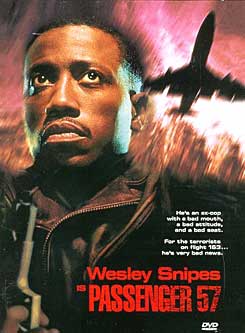
There are stories out there, crying to be told. And if no one's gonna see your movie anyway, why not make the best one you can? To quote that wizened cinematic sage, Wesley Snipes, in Passenger 57, "Always bet on black."

EDIT: I see that New Line is moving ahead with a Duke Ellington film, The Jazz Ambassadors, starring Morgan Freeman and directed by (apparently, the only black filmmaker working in the studio system) Antoine Fuqua. Good on ya.

Thursday, February 02, 2006

Wanna hear something really scary?

It was, today, 55 degrees in midtown Manhattan. In February. It was 60 last week. Sure, it takes some dips, every now and then, but it's an even 25 degrees warmer than it should be.

This kinda frightens me.

A relatively reliable friend told me that there have been butterfly sightings, at a time and in places where butterflies shouldn't be sighted.

Let's pretend we're living a science fiction film, something like The Day After Tomorrow or The Core or Independence Day. Right about now is when the hunky, unorthodox-but-super-brainy scientist starts to get a weird vibe: There's something not right here.

Said hunk-o-brain then does a whole mess of very quick but totally error-free research and learns that Impending Doom is about to happen. Then he begins the daunting process of getting Someone to Listen. Invariably, he talks to the President and he either doesn't get it or doesn't want to get it until it's too late. (I know, in Independence Day, POTUS does get it and does something about it. Give me this one.)

What's scaring me out of my spats is that we've currently got a commander-in-chief who wouldn't get it...and there would be no convincing him.

Sleep tight.